


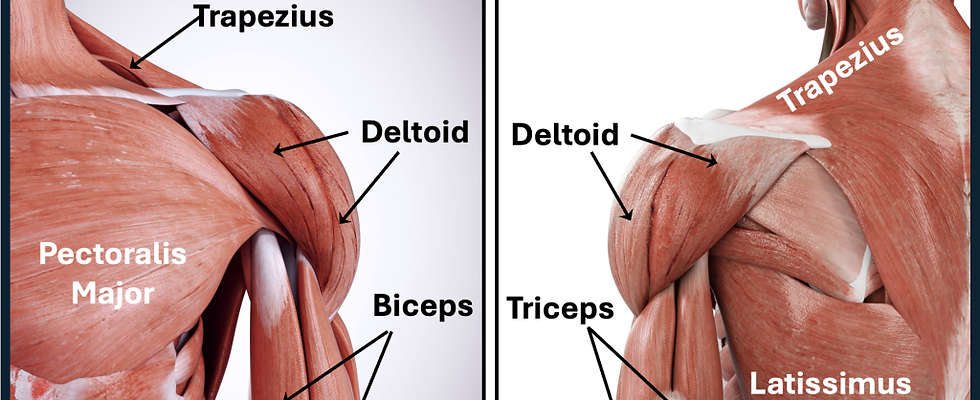
Shoulder pain can be frustrating and limiting. The shoulder is one of the most mobile joints in the body, which also makes it one of the most vulnerable to injury and dysfunction. Pain can develop after a specific incident like a fall or sports injury, or it can build up gradually from repetitive use, poor posture, or age-related changes.
Shoulder pain shows up in many forms. You might feel a deep ache in the joint, sharp pain when you reach overhead, or discomfort when lying on your side at night. Some people experience weakness that makes it hard to lift objects or perform everyday tasks. Others notice stiffness that limits their range of motion, making it difficult to put on a jacket, reach behind their back, or wash their hair. Clicking, popping, or grinding sensations are also common.
What Causes Shoulder Pain?
Shoulder pain has a wide range of potential causes:
-
Rotator cuff strains, tears, or tendinitis
-
Shoulder impingement or compression of tendons and bursa
-
Frozen shoulder, where stiffness develops and limits movement
-
Bursitis or inflammation of the fluid-filled sacs in the joint
-
Labral tears or cartilage damage
-
AC joint injuries or arthritis
-
Bicep tendinitis or irritation of the bicep tendon
-
Referred pain from the neck or upper back
-
Poor posture and muscle imbalances from prolonged sitting or desk work
-
Overuse from repetitive overhead movements in work or sports
Some shoulder pain has a clear starting point, like reaching awkwardly or taking a hit during a game. Other times it creeps in without an obvious cause, often tied to repetitive strain or compensatory patterns from other areas.
When Shoulder Pain Becomes Chronic
Shoulder pain that lingers beyond a few months can be harder to resolve. Chronic shoulder pain often involves not just the joint but also how the shoulder blade, spine, and surrounding muscles work together. Weakness, guarding, and altered movement patterns can all contribute. Over time, avoiding certain movements can lead to further stiffness and loss of function, creating a cycle that's harder to break.
When to Seek Help
You don't need to live with shoulder pain or wait until you can't lift your arm to do something about it. If your shoulder is affecting your sleep, limiting your ability to work or exercise, or making everyday activities harder, it's worth addressing.
Living With Shoulder Pain
Shoulder pain is treatable. With proper assessment, hands-on treatment, and targeted strengthening, most people see significant improvement in their pain and function. At Kevlar Performance & Rehab in Burlington, we work with people dealing with shoulder pain to help them move better and feel better.